


In the CNC machining industry in Vietnam, product quality control is a critical factor to ensure that components meet strict tolerances (typically ±0.001 mm to ±0.01 mm). CNC measuring machines and CNC measurement tools play a key role in the inspection process, helping detect deviations early, reduce scrap rates, and improve a company’s reputation.
This article provides a detailed explanation of what a CNC measuring machine is, the most common CNC measurement tools used today, and the key characteristics of CNC measurement toolkits—especially useful for QC engineers and CNC machine operators in industrial zones.
What Is a CNC Measuring Machine?
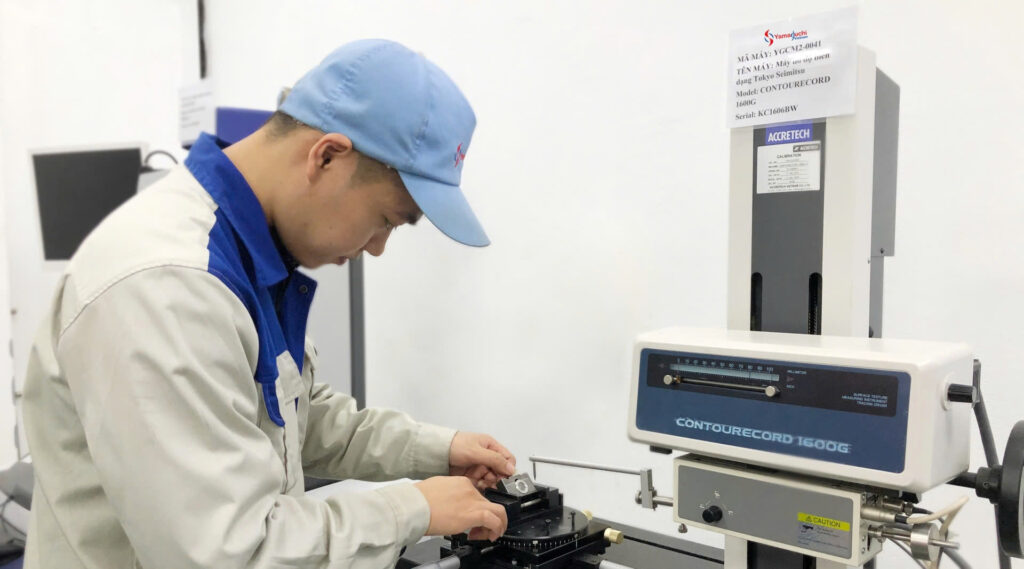
A CNC measuring machine (CNC Measuring Machine) is an automated measurement system that uses computer numerical control technology to accurately inspect dimensions, shapes, positions, parallelism, perpendicularity, and GD&T (Geometric Dimensioning and Tolerancing) parameters of mechanical components.
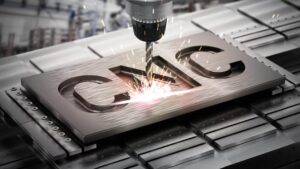
Unlike CNC machining machines (milling or turning), CNC measuring machines focus on inspection rather than material removal. They operate by automatically moving a probe or camera according to a programmed measurement path, collecting measurement data and comparing it with the CAD model.
Main Types (Common in Vietnam)
2D Optical Measuring Machine – VMM (Video Measurement Machine)
This is the type most commonly referred to as a “CNC measuring machine” in many Vietnamese workshops.
Structure
- Solid granite base for high stability
- High-resolution CCD camera (typically 1/3” or higher)
- Multi-directional LED lighting system (ring light, coaxial light, bottom light)
- Linear optical scales for precise positioning
Working Principle
The system uses image recognition software (edge detection) to measure edges, holes, and distances in 2D space (X-Y). Some machines can perform 2.5D measurement with automatic Z-axis movement.
Accuracy
- Accuracy: ±(1.5 + L/300) µm (L: measurement length)
- Repeatability: ±1–2 µm
Applications
- Measuring small to medium flat components such as
- Stamping dies
- Electronic components
- PCB boards
- Medical precision parts
Common models
OPTIV Lite (Yamaguchi), Micro-Vu, Rational, Sinowon – typically priced from $12,000 to $35,000 depending on table size.
3D Coordinate Measuring Machine (CMM)
A CMM (Coordinate Measuring Machine) is a high-end measuring device capable of measuring full 3D coordinates (X-Y-Z).
Structure
- Bridge-type, gantry-type, or horizontal arm structure
- Contact probes (Renishaw, Zeiss)
- Non-contact sensors such as laser scanners or optical probes
Working Principle
The probe either touches measurement points (touch-trigger) or performs continuous scanning, collecting 3D coordinates. Specialized software calculates GD&T parameters.
Accuracy
Typically ±0.5–2 µm, suitable for complex precision components.
Applications
- Automotive components (frames, engines)
- Aerospace parts (turbine blades)
- Large molds and dies
- Full product inspection
Popular brands
Mitutoyo Crysta-Apex, Zeiss Contura, Hexagon Global – prices typically range from $40,000 to over $200,000.
Typical measurement workflow
Place workpiece → Import CAD & create measurement program → Run automatic measurement → Generate report (Excel/PDF with deviation charts).
Most Common CNC Measurement Tools Today
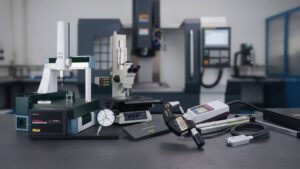
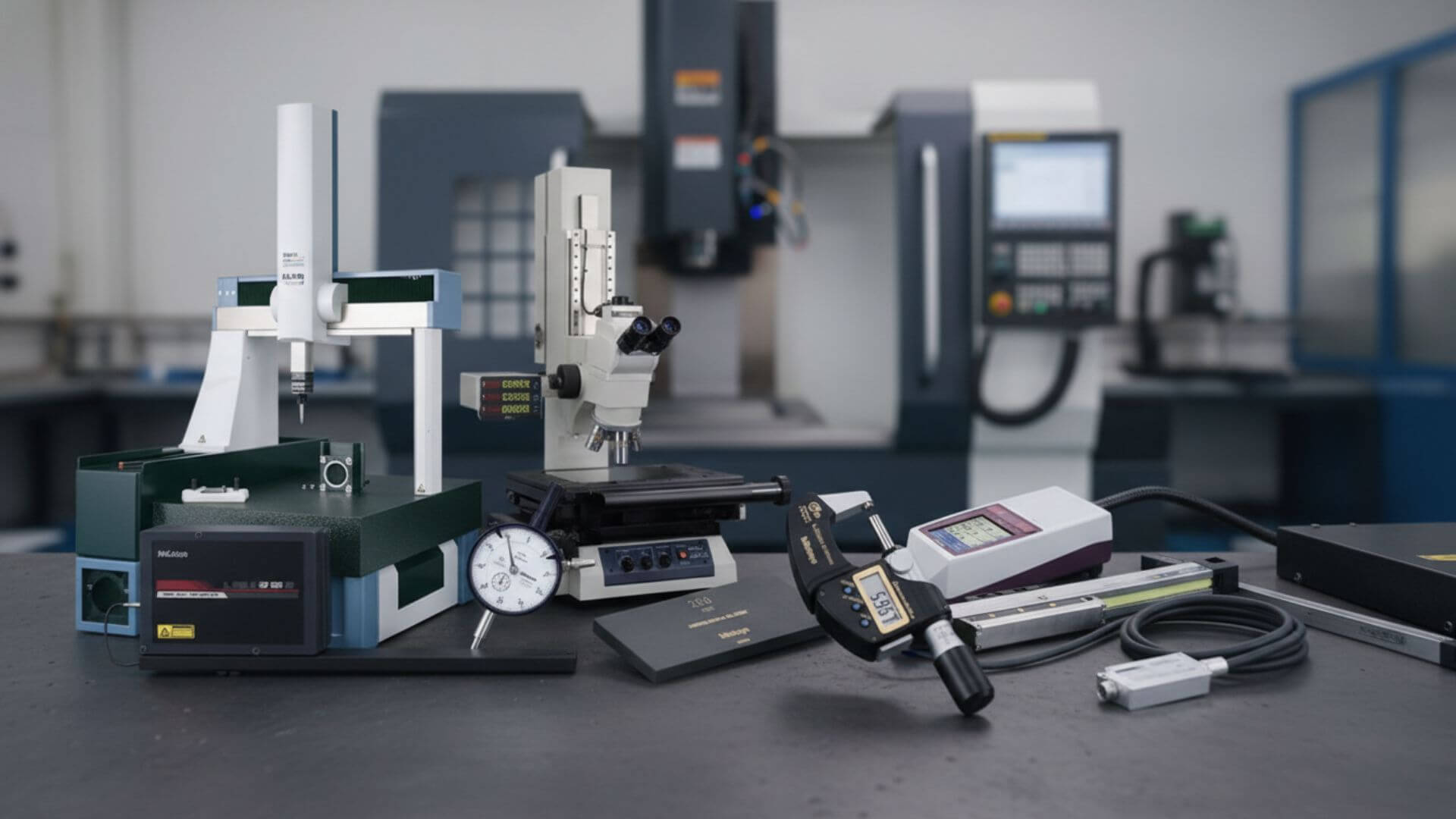
CNC measurement tools include high-precision manual instruments used directly in workshops and automated systems. Below are the most common tools used in Vietnamese machining factories.
Digital Caliper
Used to measure:
- Outside dimensions
- Inside dimensions
- Depth
- Height
Accuracy:
- 0.01 mm (standard)
- 0.005 mm (high precision)
Popular models:
- Mitutoyo 500 Series
- Insize 111-101
Micrometers (Outside / Inside / Depth)
Used to measure external diameters, internal diameters, thickness, and depth.
Accuracy: 0.001–0.005 mm
Common electronic models:
- Insize 3109
- Mitutoyo 293 Series
Dial Indicator / Test Indicator
Used to measure:
- Runout
- Parallelism
- Flatness
- Vibration
Typically mounted on a magnetic base when used on CNC machines.
Accuracy: 0.001 mm
Digital Height Gauge
Used to measure:
- Height from reference surface
- Hole distances
Accuracy: 0.005 mm
Example model: Mitutoyo 192 Series
On-Machine Probes
Examples:
- Renishaw OMP40 / OMP60
- Blum TC50
These probes measure workpiece position or tool offset directly on CNC machines, reducing setup time by 50–70%.
Optical VMM & 3D CMM Systems
As described earlier, these are advanced automated measurement systems used for high-precision inspection.
Portable Arm CMM
Examples:
- Hexagon Romer Arm
- FaroArm
These are portable measuring arms used for inspecting large components directly on-site.
Additional Inspection Tools
Other common inspection tools include:
- Bevel protractors (angle measurement)
- Go/No-Go gauges
- Thickness gauges
These tools are useful for quick tolerance checks.
Key Features of a CNC Measurement Tool Kit
A typical CNC measurement toolkit (including digital calipers, micrometers, dial indicators, magnetic bases, height gauges, and measuring fixtures) offers several important advantages.
High Precision and Repeatability
Accuracy ranges from:
- 0.001 mm (micrometers, dial indicators)
- Up to 0.5 µm (CMM systems)
This ensures accurate measurement of diameter, depth, thickness, 3D coordinates, angles, and surface features.
High Speed and Automation
Digital tools provide instant readings on LCD displays, automatic zeroing, and data storage.
Advanced machines such as VMM and CMM can measure multiple parts within minutes, reducing inspection time by up to 70% compared to manual methods.
Versatility and Flexibility
These tools can measure a wide range of parameters:
- External, internal, depth, and height dimensions
- Angles and tolerances
- Multiple materials such as metal, plastic, and composite
They are suitable for shop-floor measurements or dedicated metrology labs.
Digital Integration and Software Support
Modern measurement systems can connect via Bluetooth or USB to QC software such as:
- SPC systems
- Excel-based analysis tools
They allow statistical analysis, deviation charts, and quality reports, supporting standards such as ISO 9001 and IATF 16949.
Durability and Easy Maintenance
Measurement tools are typically made from durable materials such as:
- Stainless steel
- Carbide
- Granite
- Optical glass
They are resistant to wear and require calibration every 6–12 months.
Improved Safety and Reduced Human Error
Digital measurement reduces manual reading errors and minimizes direct human contact with sensitive components.
Automated reports also eliminate disputes in quality inspection processes.
Using proper measurement systems can reduce scrap rates to below 0.5%, especially in large-scale manufacturing for companies such as Samsung, Intel, and Foxconn.
Conclusion
CNC measuring machines (2D VMM or 3D CMM) together with common CNC measurement tools form the foundation of quality control in modern CNC machining. With micron-level accuracy, high speed, and automation, these systems help Vietnamese manufacturers meet international production standards.
If you are planning to build a metrology laboratory, or need VMM/CMM machines, Renishaw probes, or Mitutoyo/Insize measuring tools that fit your budget, contact Yamaguchi, a trusted supplier of industrial equipment and CNC measurement tools in Vietnam.
Contact now for detailed consultation:
0948519229 – 0914963282 (Zalo)