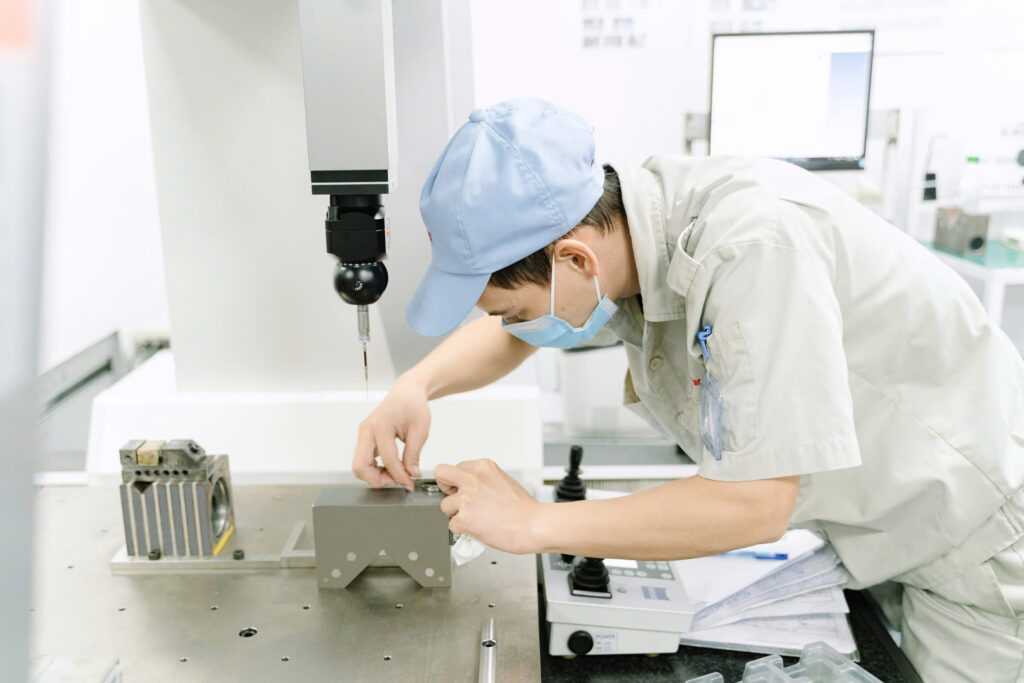


In the field of CNC machining, CNC clamping tools (tool holding & work holding) are considered a key factor that determines the final machining quality. They not only hold cutting tools or workpieces in place but also ensure efficient transmission of cutting forces, minimize vibration, maintain high precision, and extend the lifespan of both cutting tools and CNC machines.
A well-designed clamping system allows cutting tools to operate at optimal speeds and feed rates without misalignment or vibration. As a result, it improves surface finish quality, reduces scrap rates, and increases overall productivity. Conversely, if the wrong clamping tools are selected, even the most advanced CNC machines will struggle to achieve the desired machining tolerances.
CNC clamping tools are generally divided into two main groups: tool holding and work holding. Tool holding devices connect the cutting tool to the machine spindle, while work holding devices secure the workpiece on the machine table. Both must meet strict technical requirements regarding runout, rigidity, dynamic balance, and stable clamping force.
What Are CNC Clamping Tools? Their Importance in Machining
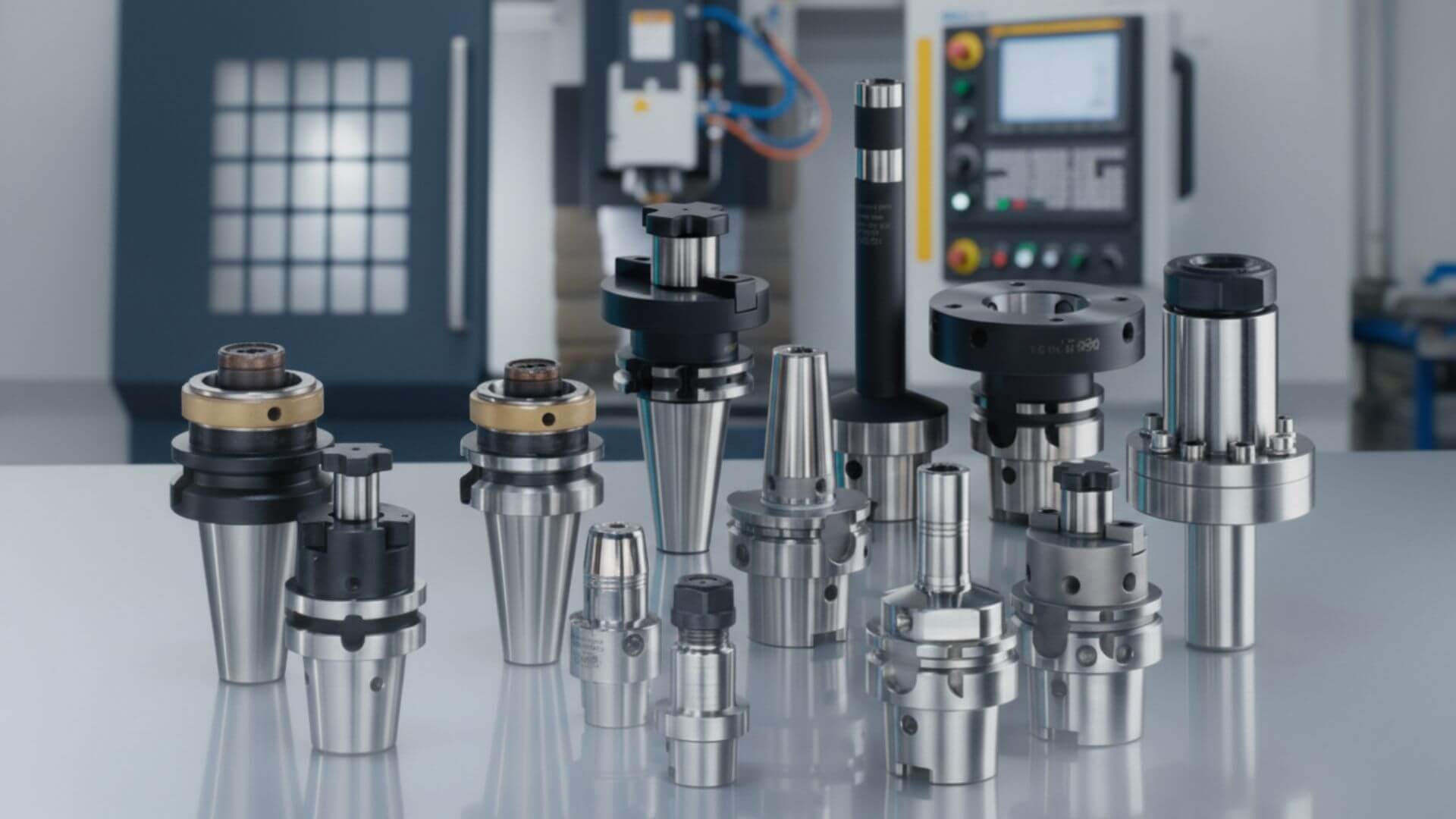
CNC clamping tools refer to the entire system of intermediate components located between the CNC machine spindle and the cutting tool, or between the machine table and the workpiece. These include parts such as tapers, tool holders, collets, vises, and clamping screws, typically manufactured from high-grade alloy materials capable of withstanding large cutting forces while maintaining high machining precision.
From a technical standpoint, clamping tools must ensure several key factors.
First, low runout is essential. Runout is typically required to be below 0.005 mm to ensure the cutting tool rotates precisely along its axis, preventing uneven wear and extending tool life.
Second, the system must achieve proper dynamic balance. Most high-quality tool holders meet G2.5 or G6.3 balance grades according to ISO 1940, allowing the machine to operate safely at high spindle speeds without dangerous vibrations.
Third, the clamping system must provide efficient transmission of cutting forces, ensuring the tool does not slip or deform under heavy cutting loads.
Because of this crucial “bridge” role between the machine and the cutting process, CNC engineers consider the selection of clamping tools to be just as important as G-code programming or cutting tool selection.
Common Types of CNC Clamping Tools
A. Tool Holding Devices
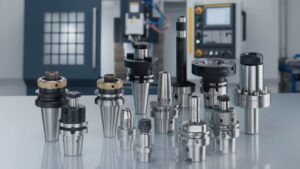
One of the most widely used tool holders in CNC workshops in Vietnam is the ER collet chuck. This tool holder is popular due to its excellent flexibility. The ER collet system consists of a chuck body made from alloy steel and a conical elastic collet. When the nut is tightened, the collet compresses evenly from all directions, creating uniform clamping force on the tool shank. A major advantage is that each ER collet can clamp a relatively wide range of tool diameters, typically around 1 mm.
For example, an ER32 collet can clamp tools ranging from Ø3 to Ø20 mm. It allows quick tool changes and offers a cost-effective solution. Runout usually ranges between 0.005–0.01 mm, making it suitable for most milling, drilling, tapping, and reaming operations on CNC milling machines.
Another common tool holder is the side lock end mill holder. This type uses a side locking screw to secure end mills that have a Weldon flat shank. The mechanical clamping mechanism provides extremely strong clamping force and high rigidity, enabling the holder to withstand heavy cutting loads. This makes it an ideal choice for rough machining or edge milling operations with large-diameter tools where strong cutting forces and minimal vibration are required.
The hydraulic chuck operates based on Pascal’s principle. Hydraulic oil is injected into a sealed chamber, generating uniform pressure around the tool shank. This creates extremely strong clamping force with runout typically below 0.003 mm, along with excellent vibration damping capability. Hydraulic chucks are commonly used in high-precision machining, complex mold manufacturing, and automotive components where superior surface finish and long tool life are required.
Another advanced option is the shrink fit holder, which uses the principle of thermal expansion. The holder is heated to approximately 350–450°C, allowing the cutting tool to be inserted. As the holder cools, it contracts tightly around the tool shank. This method provides the highest clamping force among tool holders, combined with exceptional rigidity and outstanding dynamic balance. It is considered an optimal solution for high-speed machining and cutting hard materials.
For face milling operations, the face mill arbor is specifically designed to hold indexable face mills. It typically features a straight arbor or BT/ISO taper design with a locking screw system to secure the cutting inserts. This holder provides extremely strong clamping force and low vibration, enabling efficient machining of large flat surfaces with high productivity.
B. Work Holding Devices
In addition to tool holders, CNC machining also requires reliable work holding devices to secure the workpiece.
The mechanical vise uses a manual screw mechanism to generate clamping force. While the clamping force is moderate, it is stable and reliable. Mechanical vises are suitable for small-scale machining, simple parts, and operations with limited budgets.
The hydraulic vise uses hydraulic oil to generate large and consistent clamping force without relying on manual effort. The parallelism between the two jaws is typically controlled within 0.005 mm, making hydraulic vises ideal for mass production environments.
For high-precision applications, precision vises are manufactured with extremely tight tolerances. Many models also include 360° rotation capability or multi-directional clamping functions, making them suitable for mold manufacturing and components requiring the highest levels of machining accuracy.
How to Choose the Right CNC Clamping Tools
Selecting the right CNC clamping tools requires careful evaluation of several important factors.
The first factor is the spindle taper standard of the CNC machine. This is the most fundamental requirement. CNC milling machines commonly used in Vietnam typically use BT30, BT40, or HSK tapers. Choosing the correct taper and pull stud is essential to avoid damaging the machine spindle.
The next factor is the type of machining operation and cutting load. For lighter machining operations that require frequent tool changes, ER collet systems are often the most practical choice. For heavy machining operations with high cutting forces, side lock holders or hydraulic chucks are more suitable. For high-speed machining with superior surface finish requirements, shrink fit holders are typically preferred.
Another consideration is the diameter and type of cutting tool. If tools of different sizes are used frequently, ER collets provide the most flexibility. For large fixed-diameter tools, side lock holders or shrink fit holders may be more appropriate. For large face milling cutters, face mill holders are required.
The required precision level and vibration control should also be evaluated. If extremely low runout (below 0.003 mm) and maximum vibration reduction are necessary, hydraulic or shrink fit holders are recommended. For general machining tasks where ultra-high precision is not required, ER collet systems are usually sufficient.
Spindle speed and dynamic balance are also important factors. If the machine operates at speeds above 20,000 rpm, tool holders with at least G2.5 balance grade should be used.
Finally, budget and usage frequency should be considered. For limited budgets and frequent tool changes, ER collet systems provide the best cost-performance balance. For long-term investment in high-precision machining, hydraulic or shrink fit holders are more suitable.
It is also recommended to choose products from reputable manufacturers such as Vertex, BIG Daishowa, and Rego-Fix to ensure high material quality and durability.
Conclusion
CNC clamping tools are not just accessories; they form the backbone of every CNC machining process. Understanding their function, the most common types, and how to select the right system will allow you to maximize the performance of your CNC machines, reduce waste, and significantly improve product quality.
If you need specific advice on tool holders, collets, vises, or selecting the right clamping system for your CNC machine, contact Yamaguchi, a trusted supplier of genuine industrial equipment and CNC tools in Vietnam.
Contact us now for the best pricing:
094 851 9229 – 091 496 3282 (Zalo)